Jornal Boca de Rua is a newspaper made by and for unhoused people in Porto Alegre, a project with real cultural weight and deeply committed journalists, but almost no digital presence and a subscription process that ran entirely on manual effort.
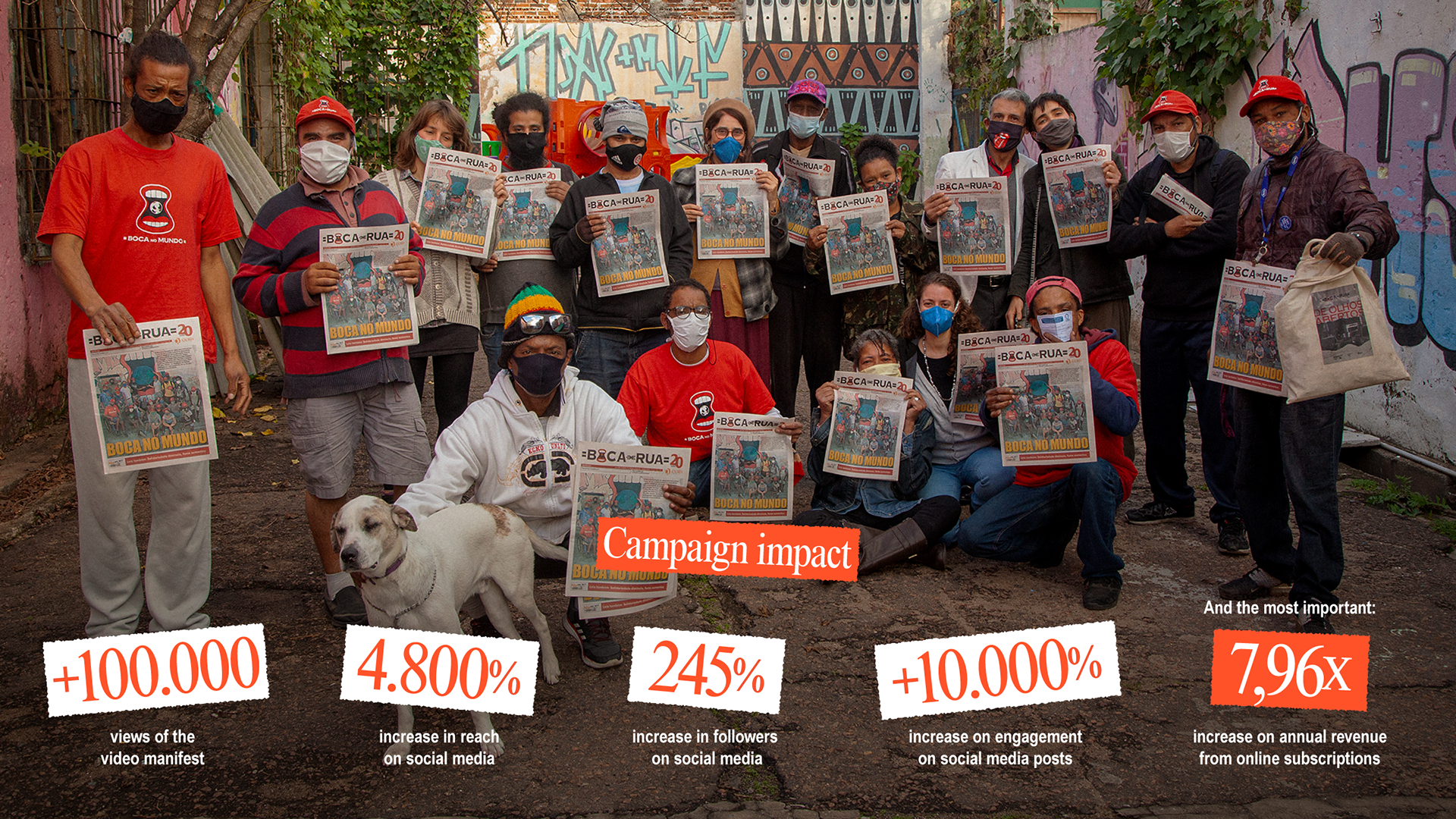
With no client budget for media or paid distribution, we needed to build an organic campaign from scratch. The result redefined the newspaper's reach, increasing reach and followers' numbers, with over 100,000 views on the campaign video. But the metric that matters most is the one that directly changes lives: a 696% growth in annual revenue from online subscriptions over 3 years after the campaign. A project that's still putting real, consistent income into the hands of the journalists who make every edition.
With no client budget for media or paid distribution, we needed to build an organic campaign from scratch. The result redefined the newspaper's reach, increasing reach and followers' numbers, with over 100,000 views on the campaign video. But the metric that matters most is the one that directly changes lives: a 696% growth in annual revenue from online subscriptions over 3 years after the campaign. A project that's still putting real, consistent income into the hands of the journalists who make every edition.
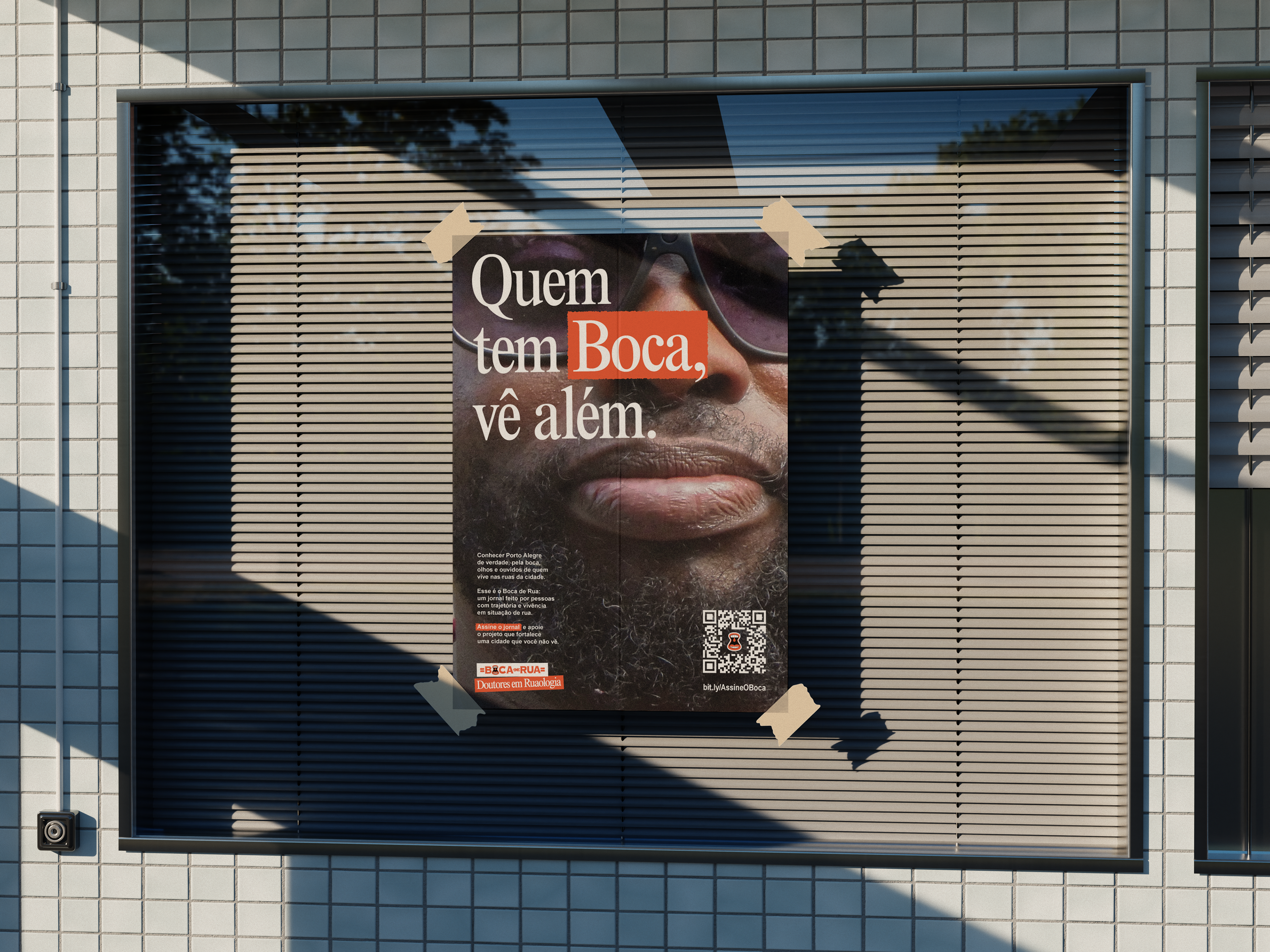
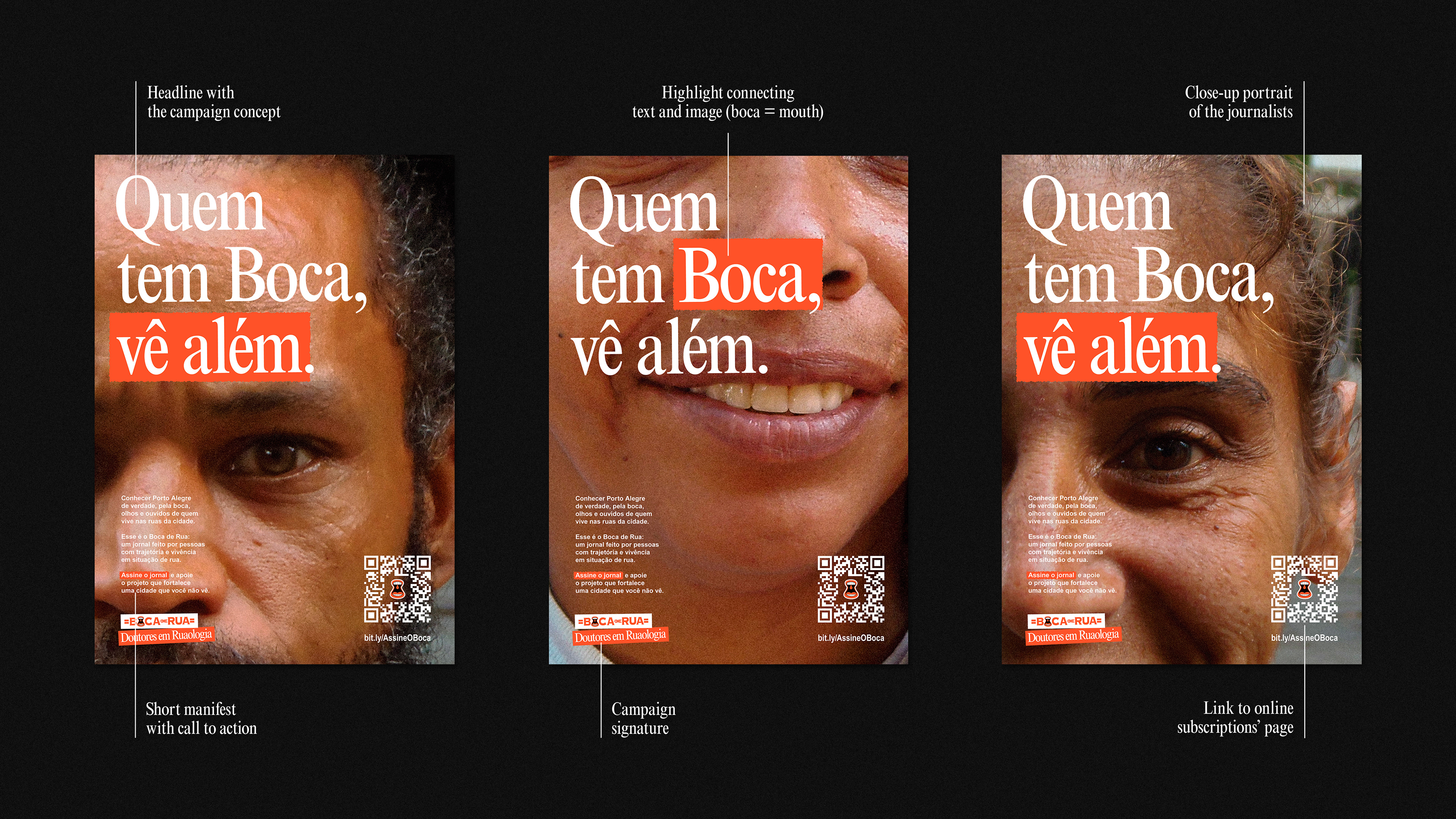
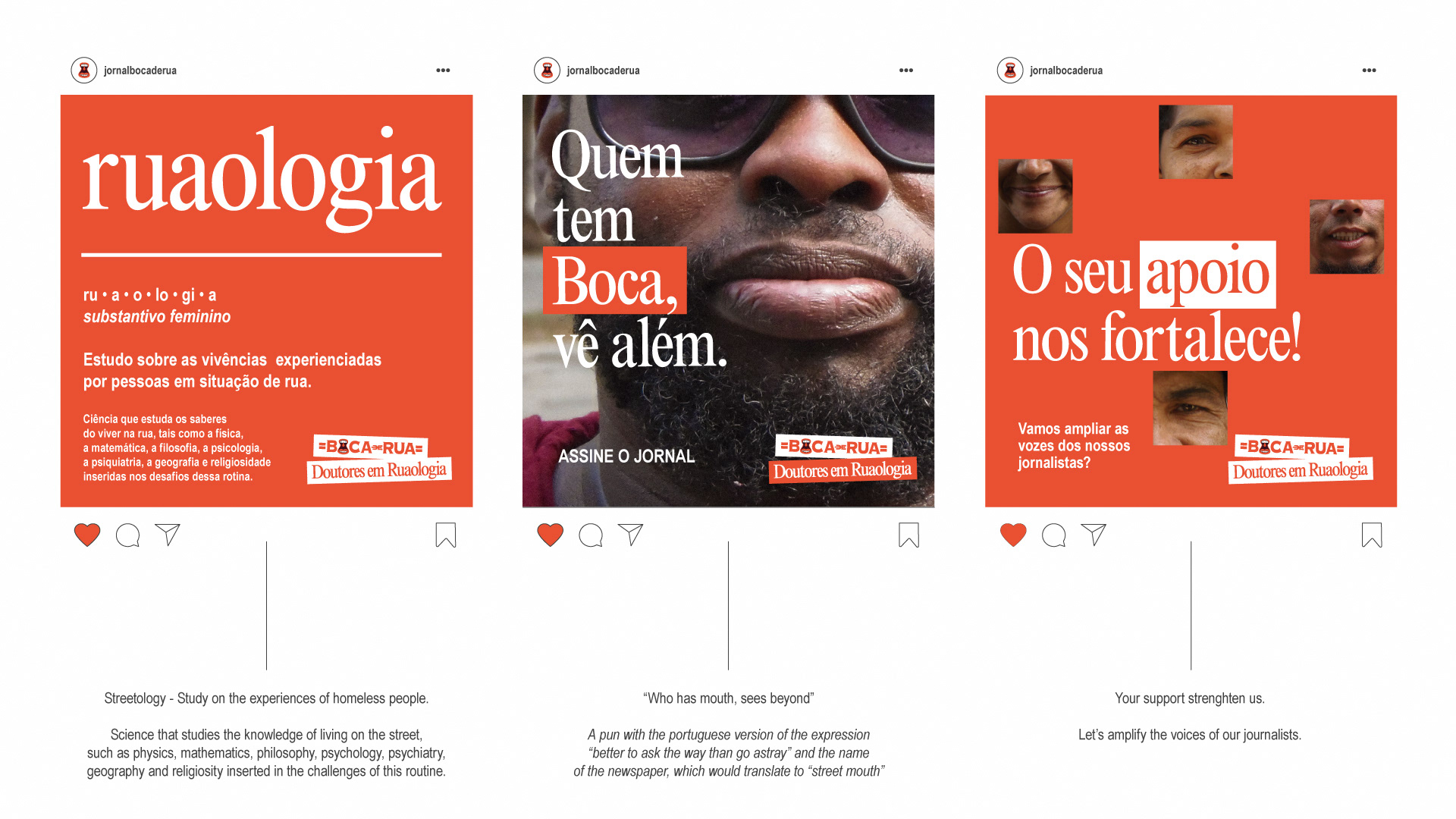
The campaign's central idea was to flip the narrative: rather than asking for sympathy, it positioned Boca's journalists as experts: the Doctorates in Ruaologia ("streetology"). The word, invented by Carlos Henrique da Rosa, is the science based on experience and raw knowledge that comes from the streets, which only those who go through the everyday challenges of life in the city know about.
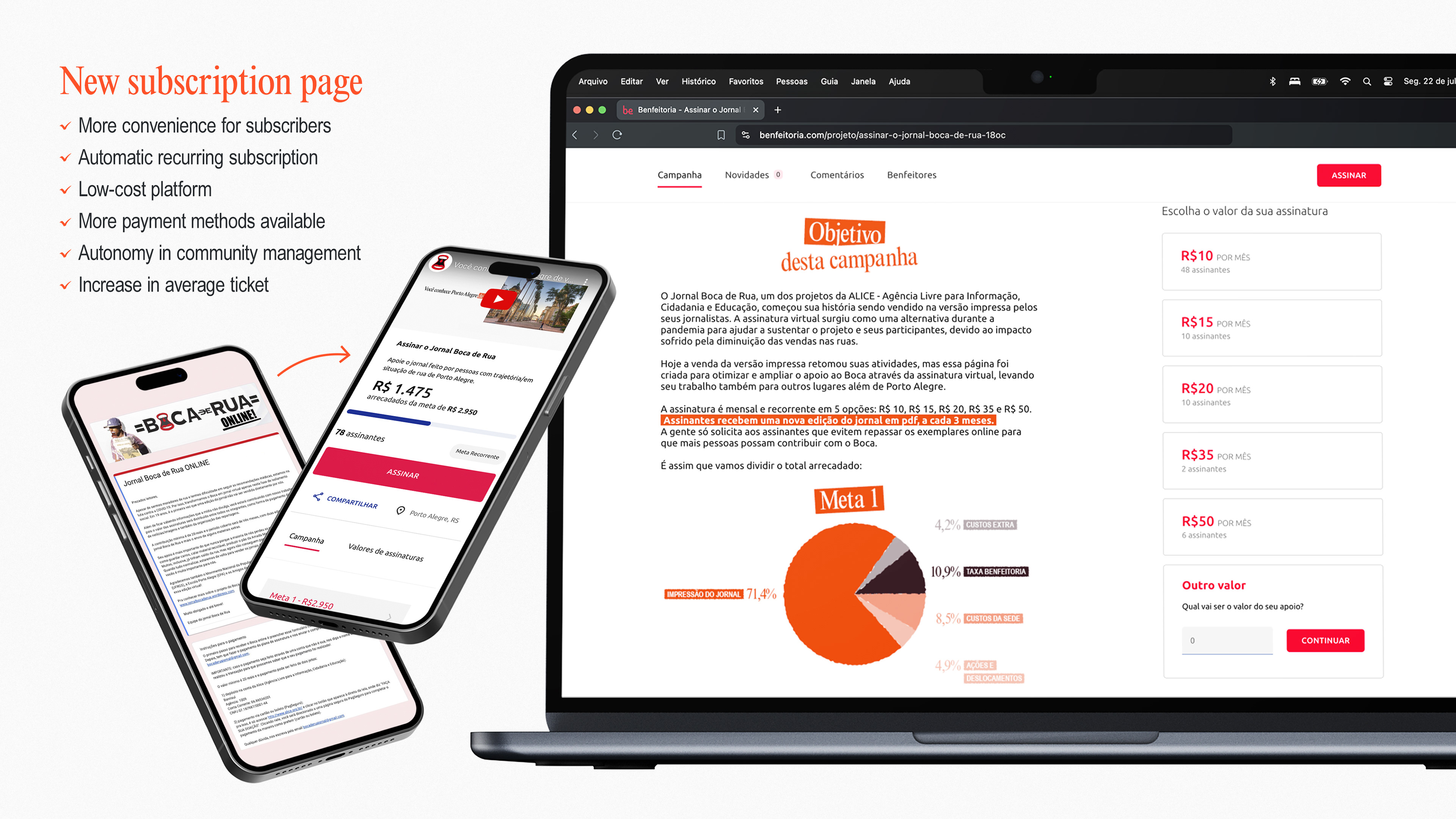
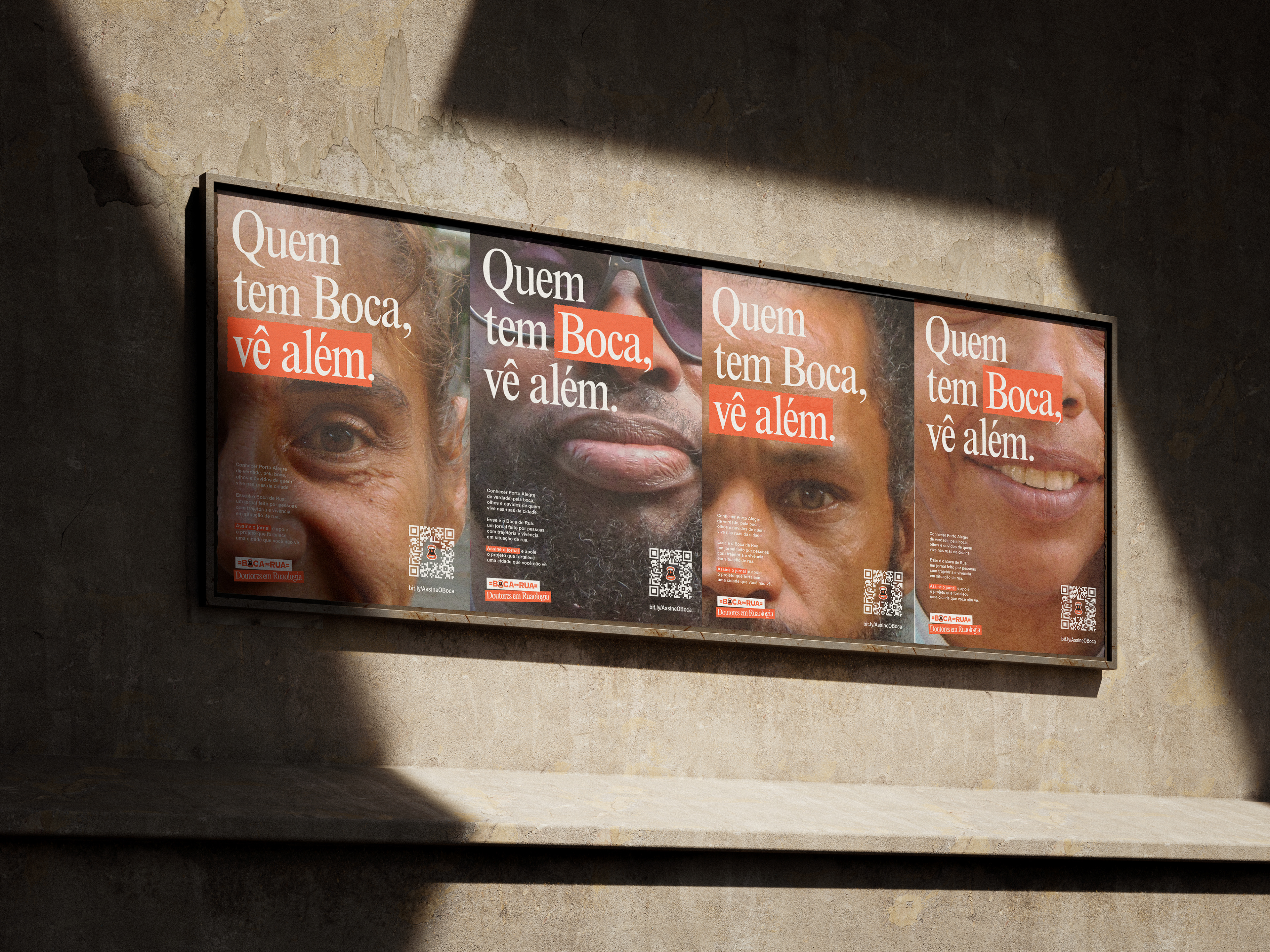
The visual language matched that ambition, borrowing from the visual grammar of prestigious print newspapers — bold serif typography, blocked images, high-contrast color fields — while avoiding aesthetic stereotypes of homeless people and applying it to stories only Boca's journalists could tell. The main headline "Quem tem boca vê além" ("Who has mouth sees beyond") captures that in a single line: a pun that folds together the newspaper's name (Boca de Rua, "street mouth"), the Portuguese expression for "better to ask away than go astray," and the idea that these journalists see the city more clearly than anyone. The campaign also tackled the subscription experience itself: replacing the old manual process with a structured crowdfunding platform, making it easier for new subscribers to join and simpler for the team to manage their growing community.
The visual language matched that ambition, borrowing from the visual grammar of prestigious print newspapers — bold serif typography, blocked images, high-contrast color fields — while avoiding aesthetic stereotypes of homeless people and applying it to stories only Boca's journalists could tell. The main headline "Quem tem boca vê além" ("Who has mouth sees beyond") captures that in a single line: a pun that folds together the newspaper's name (Boca de Rua, "street mouth"), the Portuguese expression for "better to ask away than go astray," and the idea that these journalists see the city more clearly than anyone. The campaign also tackled the subscription experience itself: replacing the old manual process with a structured crowdfunding platform, making it easier for new subscribers to join and simpler for the team to manage their growing community.
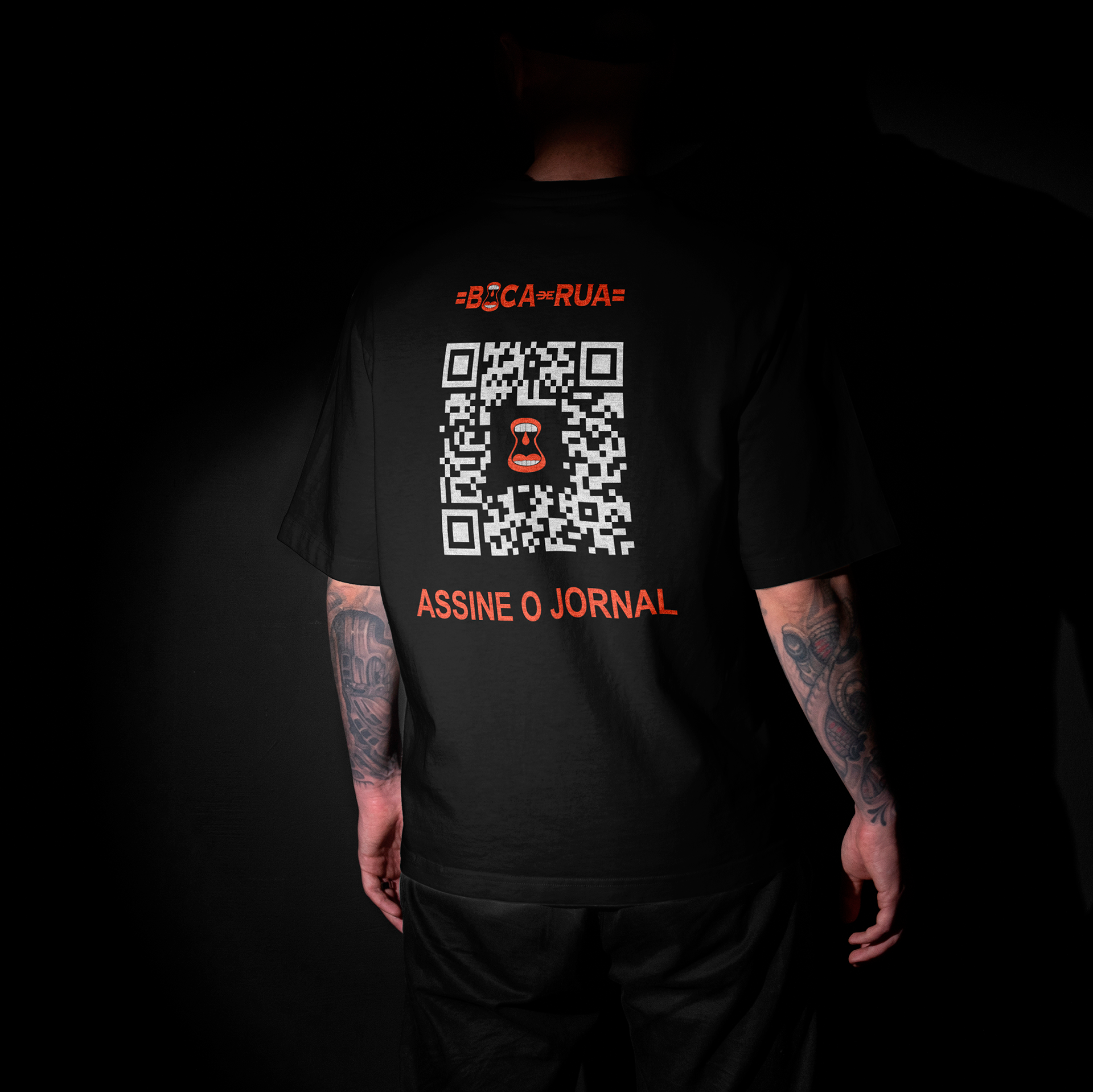
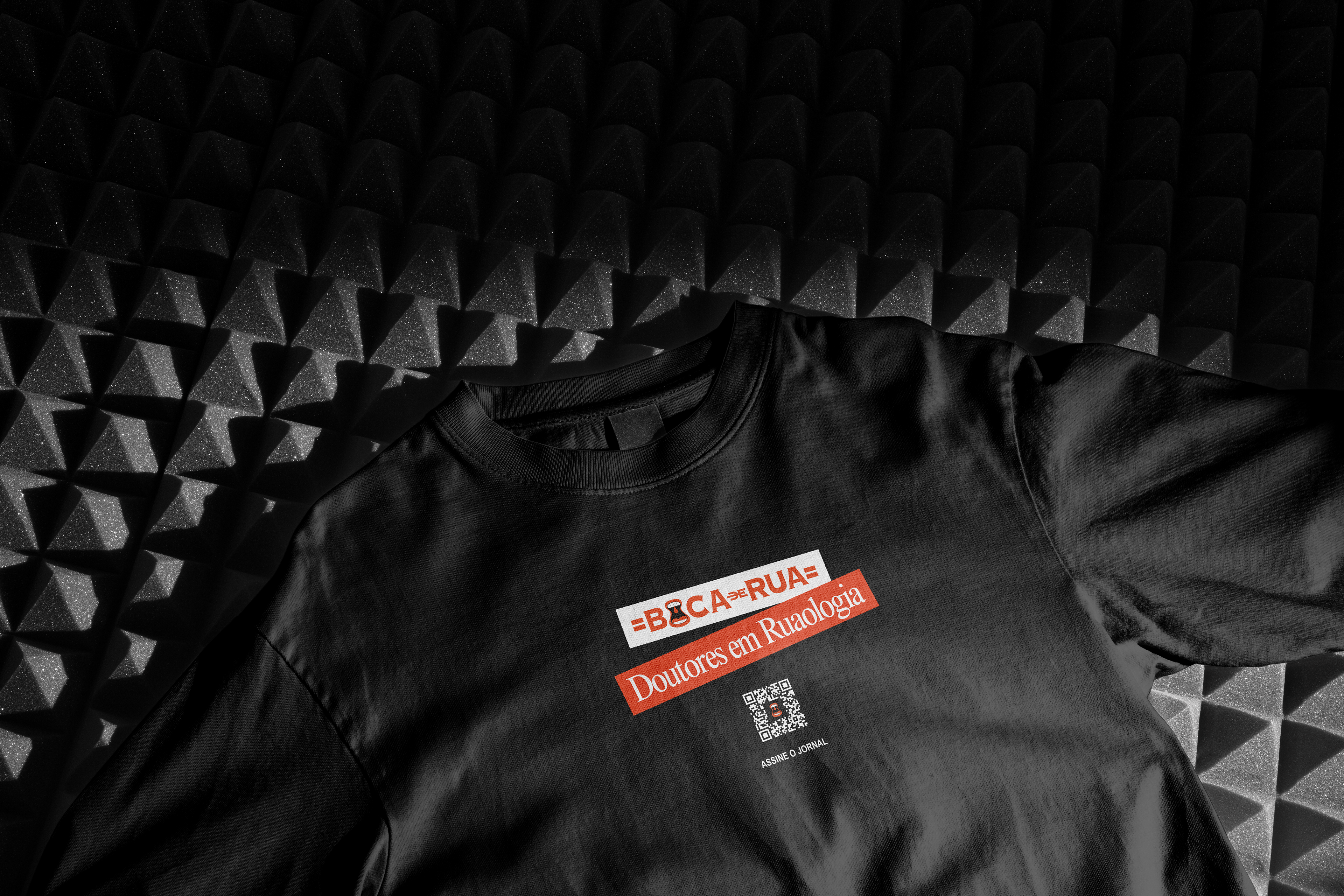
The process was built to mirror Boca's own ethos: a paper made by many hands. The team worked alongside the journalists at every stage: brainstorming, co-writing texts, developing campaign concepts, and having them shoot the campaign photography themselves, exactly as they do for every edition of the newspaper. One of the most tangible outcomes of that collaboration was the campaign shirt. Designed after one brainstorming session, it gave them a unified presence while selling newspapers on the streets, and doubled as a walking invitation, directing people to the new subscription page. The campaign's credibility and authenticity came directly from the fact that the people telling the story were the story.
CREDITS
Creative Direction: Marcos Oliveira
Project Management: Nicole Mengue
Copy: Manuella Graff
Strategy: Marcos Oliveira
Design: Priscila Czuka, Marcos Oliveira
Video: Brick Media
Media: Débora Salviato, Juliana Zanatta
Tech Consultant: Fábio Brambilla
Photography Consultant: Natália Blauth
PR: Ana Carolina Pinheiro
Logistics: Pedal Express
ALICE NGO: Rosina Duarte, Talita Fernandes, Arthur Walber
ALICE Photographer: Luiz Abreu
Boca de Rua Journalists: Carlos da Rosa, Michelle Marques, Edisson Campos & team
Project Management: Nicole Mengue
Copy: Manuella Graff
Strategy: Marcos Oliveira
Design: Priscila Czuka, Marcos Oliveira
Video: Brick Media
Media: Débora Salviato, Juliana Zanatta
Tech Consultant: Fábio Brambilla
Photography Consultant: Natália Blauth
PR: Ana Carolina Pinheiro
Logistics: Pedal Express
ALICE NGO: Rosina Duarte, Talita Fernandes, Arthur Walber
ALICE Photographer: Luiz Abreu
Boca de Rua Journalists: Carlos da Rosa, Michelle Marques, Edisson Campos & team